



Feeling stuck on what to blog about? You’re not alone. Choosing a profitable blog niche is often the biggest roadblock for aspiring bloggers. I remember staring at my blank screen, wondering if I had anything valuable to share without years of expertise behind me. But here’s the truth: you don’t need to be an industry veteran to start a successful blog. What you need is a strategic approach to finding your perfect niche – one that balances your interests with genuine profit potential.
In this guide, I’ll walk you through exactly how to identify, research, and validate a profitable blog niche, even if you’re starting from zero. You’ll discover how to transform your everyday knowledge into content that attracts readers and creates income opportunities. Let’s turn your blogging dreams into a concrete plan.
What Makes a Blog Niche Truly Profitable?

Before diving into how to find your niche, let’s clarify what “profitable” actually means in the blogging world. A profitable blog niche isn’t just any topic that interests you – it’s the sweet spot where your interests meet market demand and monetization opportunities.
A truly profitable blog niche has three essential characteristics:
The most successful blogs aren’t necessarily in the “hottest” niches – they’re in niches where the blogger has found their unique angle and connected with a specific audience. And yes, you can absolutely do this without prior expertise. In fact, documenting your journey from beginner to knowledgeable enthusiast can be incredibly valuable to readers who are just a few steps behind you.
1. Identify Your Interests and Hidden Expertise
The most sustainable blogs are built on topics you genuinely enjoy. Why? Because creating content consistently is much easier when you’re interested in the subject. Let’s uncover your potential niches based on what you already know and love.
Mine Your Everyday Knowledge
You have more expertise than you realize. Consider these questions to uncover your hidden knowledge:

Create Your Interest Inventory
Grab a notebook and create three columns:
Things I Enjoy
List activities, topics, and subjects you find yourself drawn to regularly. Don’t filter yourself – write down everything from cooking to cryptocurrency.
Things I Know About
List areas where you have some knowledge, even if you’re not an expert. Include work skills, hobbies, and life experiences.
Things I’m Learning
List topics you’re currently exploring or want to learn more about. Your journey of learning can become valuable content.
Look for patterns and overlaps in your lists. These intersection points often reveal promising niche ideas that balance your interest with your existing knowledge.
The best blogs don’t come from instant expertise – they come from genuine curiosity and the willingness to share what you learn along the way.
A lesson I wish I’d known when starting my first blog
2. Research Market Demand Using Free Tools
Once you have a list of potential niches based on your interests, it’s time to see if people are actually searching for information on these topics. The good news? You don’t need expensive tools to do this research.
Use Google Trends to Gauge Interest Over Time
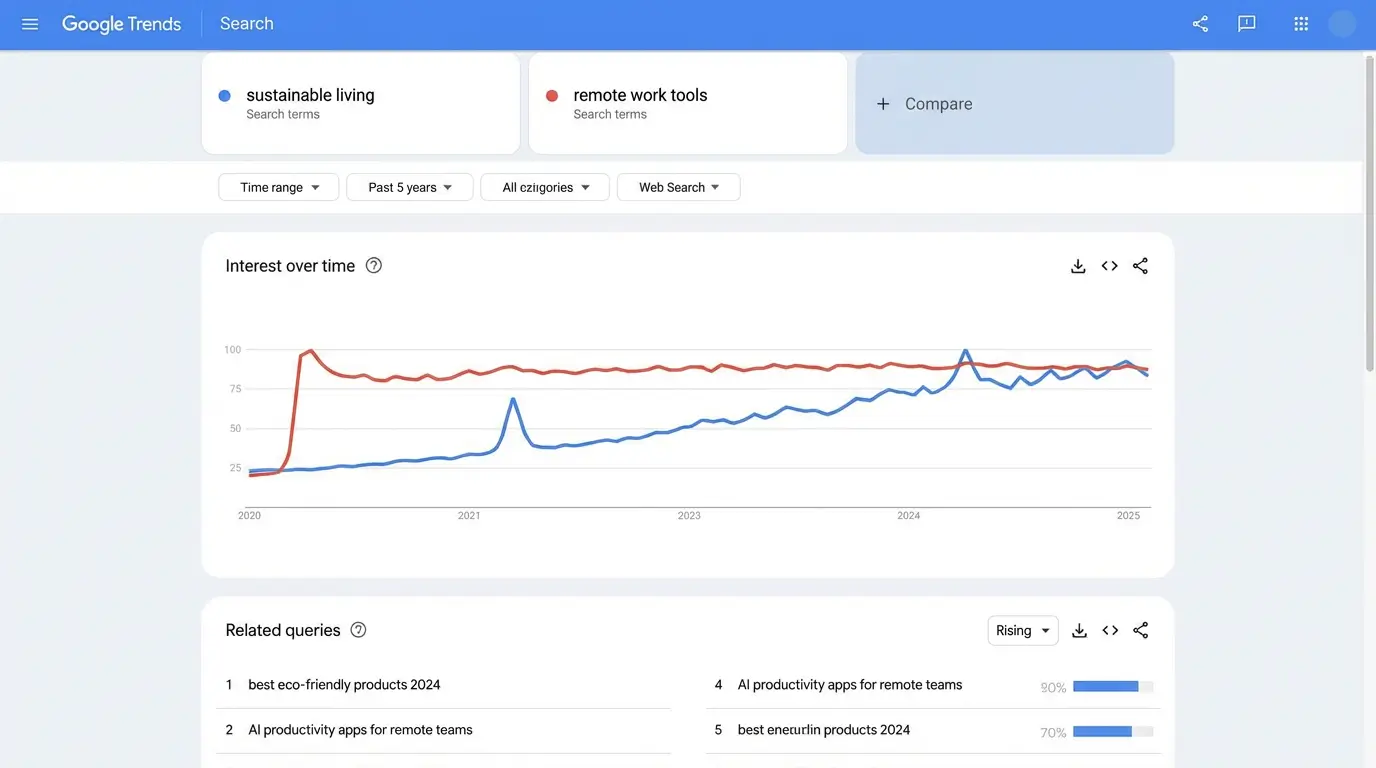
Google Trends shows you whether interest in a topic is growing, declining, or remaining steady. Here’s how to use it effectively:
- Go to Google Trends
- Enter your potential niche topic (e.g., “meal prep”)
- Set the time range to “Past 5 years” to see long-term patterns
- Look for topics with steady or increasing interest
- Pay attention to seasonal patterns that might affect content planning
Explore Related Keywords with Free Tools
Understanding what people are searching for within your niche helps you validate demand and plan content. Try these free keyword research methods:
Assess Commercial Intent
For a blog niche to be profitable, people need to be willing to spend money in that space. Look for these indicators of commercial potential:
Positive Signs
Red Flags
Pro Tip
Pay attention to the ads that appear when you search for your niche topics. More ads usually indicate stronger commercial potential, as advertisers are willing to pay for visibility in that space.
3. Analyze Competition and Find Your Unique Angle
Some competition in your chosen niche is actually a good sign – it proves there’s an audience and money to be made. The key is finding gaps you can fill, even as a beginner.
Identify Your Competitors
Start by finding the top blogs in your potential niche:
- Search Google for your main niche keywords
- Note which blogs consistently appear in the top results
- Look for related blogs in Pinterest search results
- Check social media hashtags to find influential accounts

Analyze What’s Missing
Now that you’ve identified your competitors, look for gaps you can fill:
Find Your Unique Angle
Even in crowded niches, you can carve out your space by positioning yourself uniquely. Consider these approaches:
Niche Down
Instead of “fitness,” focus on “strength training for busy parents” or “fitness for office workers with back pain.”
Combine Interests
Merge two passions like “sustainable living + budget travel” or “productivity + creative hobbies.”
Unique Perspective
Approach the topic from your specific viewpoint: “Personal finance from a first-generation immigrant’s perspective.”
The riches are in the niches. The more specific you can be about who you help and how you help them, the easier it becomes to stand out – even without decades of experience.
4. Validate Your Niche Before Committing
Before investing months of effort into a blog niche, it’s smart to validate your idea. This step helps ensure there’s real potential before you fully commit.
Join Online Communities
Communities reveal what real people in your niche care about:
- Reddit: Find subreddits related to your niche and observe common questions
- Facebook Groups: Join groups where your target audience hangs out
- Quora: See what questions people are asking about your topic
- Industry forums: Specialized forums often contain deep discussions

Test With Minimal Content
Create small content samples to gauge interest before building an entire blog:
- Write 2-3 detailed social media posts on your topic
- Create a simple Pinterest pin linking to a free resource
- Answer questions on Quora or Reddit with helpful, in-depth responses
- Start an Instagram account focused on your niche
- Analyze engagement to see which topics resonate most
Identify Monetization Paths
A profitable blog niche needs clear ways to generate income. Research these potential revenue streams:
Affiliate Marketing
Promote products related to your niche and earn commissions. Check Amazon Associates, ShareASale, and individual company programs.
Digital Products
Could you create ebooks, courses, templates, or printables that solve problems for your audience?
Display Advertising
Research CPM rates (cost per thousand impressions) for your niche to estimate potential ad revenue.
Reality Check
Most blogs take 6-12 months to start generating meaningful income. Choose a niche you’ll enjoy writing about consistently during this growth period.
5 Profitable Blog Niches With Low Barriers to Entry
While any niche can be profitable with the right approach, some are particularly accessible for beginners. Here are five niches where you can succeed without specialized credentials or years of experience:
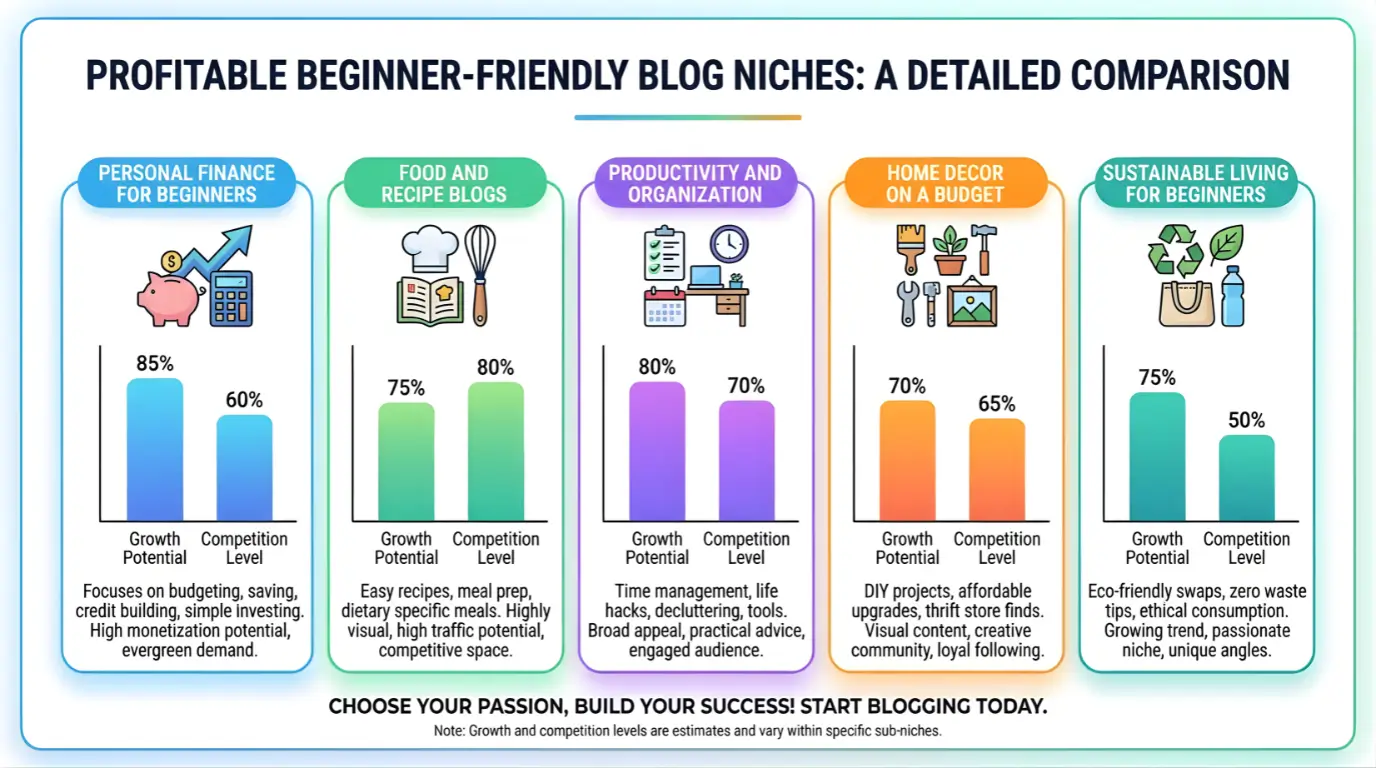
1. Personal Finance for Beginners
You don’t need to be a financial advisor to help others navigate basic money management. If you’ve successfully budgeted, saved, or paid off debt, you have valuable experience to share.
Why it works for beginners:
Content ideas to start with:
2. Food and Recipe Blogs
If you enjoy cooking at home, you already have the foundation for a food blog. You don’t need culinary training – just the ability to create and document recipes that work.
Why it works for beginners:
Content ideas to start with:
3. Productivity and Organization
Have you developed systems to manage your time, home, or digital life? These practical skills are in high demand and don’t require professional certification to share.
Why it works for beginners:
Content ideas to start with:
4. Home Decor on a Budget
If you’ve decorated your own space successfully without breaking the bank, you have valuable insights to share. This niche rewards creativity over formal interior design training.
Why it works for beginners:
Content ideas to start with:
5. Sustainable Living for Beginners
If you’re making efforts to live more sustainably, sharing your journey can help others do the same. This growing niche values authentic experiences over environmental science degrees.
Why it works for beginners:
Content ideas to start with:
Mistakes to Avoid When Choosing Your Niche
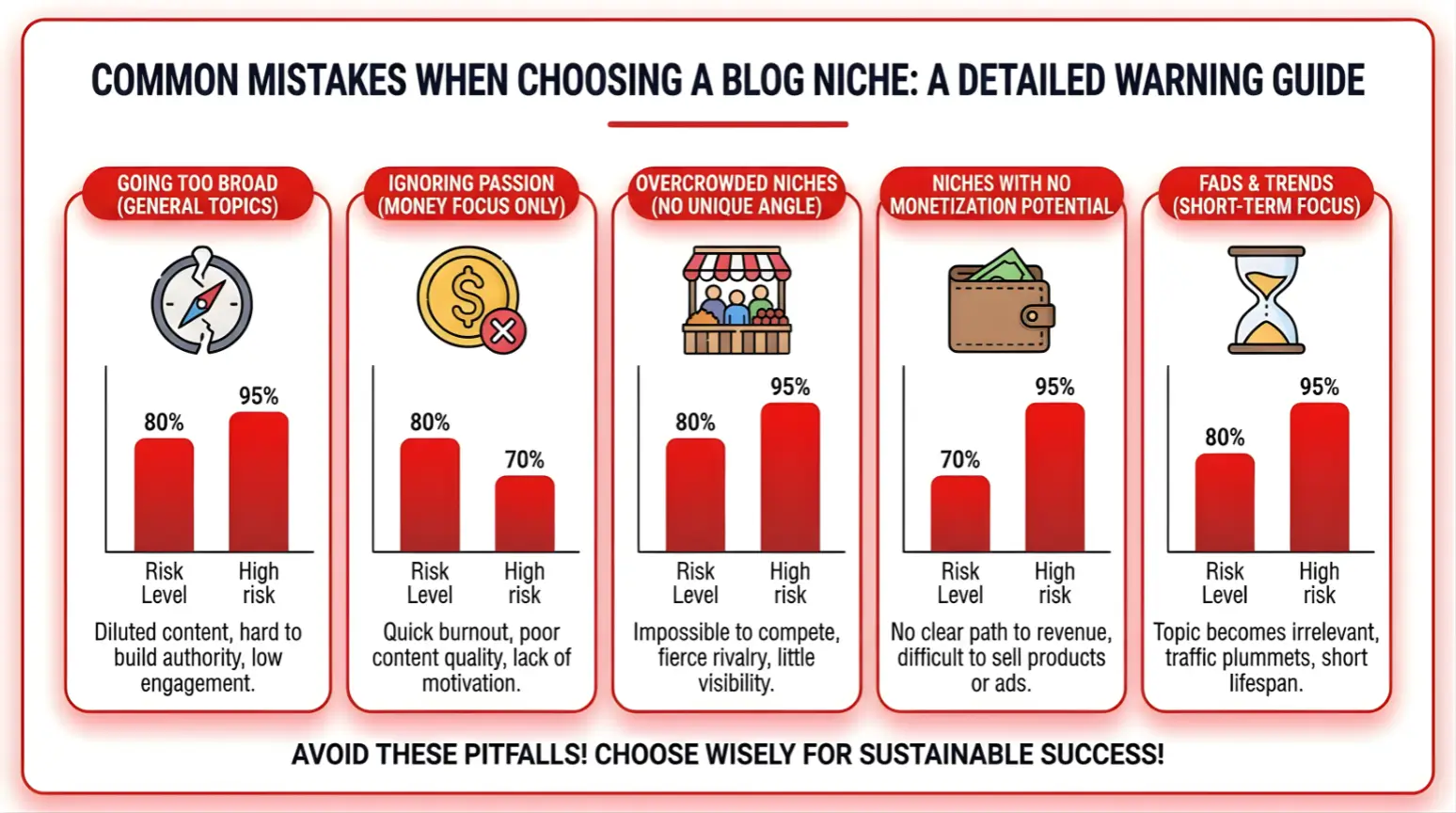
Even with the best research, it’s easy to fall into common traps when selecting your blog niche. Here are the pitfalls I’ve seen new bloggers encounter repeatedly – and how you can avoid them.
Choosing a Niche That’s Too Broad
When you try to appeal to everyone, you often end up connecting with no one. A blog about “lifestyle” or “health” is too general to attract a dedicated audience.
Instead of:
“A travel blog”
Try:
“Solo female travel in Southeast Asia on a mid-range budget”
Ignoring Monetization Potential
Some niches are easier to monetize than others. Without clear paths to revenue, your blog remains a hobby rather than a business.
Warning Sign
If established blogs in your niche don’t have visible monetization (affiliate links, products, sponsored content), that’s a red flag about profit potential.
Choosing Based on Trends Alone
Trending topics can bring short-term traffic but often fade quickly. Building a blog around a fleeting trend can leave you scrambling when interest wanes.
Risky Trend-Based Niche:
“Wordle strategy blog” (based on the popular word game)
More Sustainable Approach:
“Word games and puzzles for brain health” (broader evergreen topic)
Selecting a Niche You Don’t Genuinely Enjoy
Choosing a niche solely because it seems profitable will lead to burnout. You’ll need to create dozens or hundreds of pieces of content – if you don’t enjoy the topic, consistency will be impossible.
“The most profitable blog niche for YOU is one where your interest keeps you creating consistently long enough to reach profitability.”
Waiting for the “Perfect” Niche
Analysis paralysis prevents many potential bloggers from ever starting. Remember that you can pivot or refine your niche as you grow – the important thing is to begin.
Reality Check
Many successful bloggers didn’t nail their perfect niche on day one. They started, learned from their audience, and adjusted their focus over time.
Your Actionable Niche Validation Checklist
Use this practical checklist to evaluate each potential blog niche you’re considering. A strong niche should score well across most of these criteria.

| Validation Criteria | Questions to Ask | How to Check |
| Personal Interest | Could I happily create 100+ pieces of content on this topic? | Rate your genuine interest level from 1-10 |
| Existing Knowledge | What do I already know or am actively learning about this topic? | List specific experiences, skills, or knowledge you have |
| Search Demand | Are people actively searching for information on this topic? | Google Trends, keyword research tools |
| Growth Trend | Is interest in this topic growing, stable, or declining? | 5-year view on Google Trends |
| Commercial Intent | Do people spend money in this niche? | Look for product searches, ads in search results |
| Monetization Options | What are the specific ways to earn income in this niche? | Identify affiliate programs, product opportunities, ad potential |
| Competition Level | How saturated is this niche? Can I offer something unique? | Analyze top 10 Google results, social media presence |
| Content Sustainability | Can I generate ongoing content ideas for years? | Brainstorm 20-30 potential article topics |
| Audience Clarity | Can I clearly define who I’m creating content for? | Create a specific audience persona |
| Unique Angle | What’s my fresh perspective or approach to this topic? | Analyze the top 10 Google results, social media presence |
Pro Tip
Don’t expect any niche to score perfectly on every criterion. Look for strong performance across most categories, with particular emphasis on your interest level and monetization potential.
Conclusion
As we wrap up this guide, I want to emphasize one crucial point: your current experience level doesn’t determine your potential for blogging success. What matters most is your willingness to learn, adapt, and consistently create valuable content for your audience.
Remember these key takeaways:
The most important step is to begin. Choose a niche that excites you, has reasonable profit potential, and where you can provide value – even as you continue to learn and grow. Your unique voice and perspective are needed, regardless of your current expertise level.
What niche are you considering for your blog? What questions do you still have about finding the right topic? Share in the comments below – I’d love to help you on your blogging journey!