


Staring at a blank screen, wondering what to write about? You’re not alone. As a new blogger, coming up with blog post ideas that actually attract readers can feel overwhelming. But here’s the good news: you don’t need years of experience to create content that drives traffic. What you need are proven content frameworks that work – especially for beginners.
In this guide, I’ll share 10 beginner-friendly blog post ideas specifically designed to generate traffic. Each idea comes with step-by-step implementation tips, real examples, and SEO strategies to help your content get found. These aren’t just random suggestions – they’re battle-tested formats that work particularly well for new blogs looking to build an audience.
Why Choosing the Right Blog Post Ideas Matters
Before diving into specific ideas, let’s understand why your choice of blog post format is so crucial for traffic generation. As a beginner blogger, you’re competing with established sites that have years of content and strong domain authority. The right post type can help level the playing field.
Certain content formats naturally attract more readers because they align with how people search and what they’re looking for online. They either answer common questions, solve specific problems, or package information in a way that’s particularly valuable or shareable.
Additionally, search engines tend to favor certain content types for specific queries. By understanding these patterns, you can create blog posts that have a better chance of ranking well even without an established site.
The ideas I’m sharing aren’t just theoretical – they’re based on patterns I’ve seen work consistently for new bloggers across different niches. Let’s explore them one by one.
Have a Blog Post Idea?
Want to create an optimized and high-traffic post even faster? Use our recommended AI SEO content writer for a quality blog post.
1. How-To Guides: Step-by-Step Solutions

How-to guides are traffic magnets because they directly answer specific questions people are searching for. When someone types “how to start a blog” or “how to make sourdough bread” into Google, they’re looking for clear, actionable instructions – exactly what your how-to post provides.
These posts perform well because they solve problems, demonstrate your expertise, and tend to be comprehensive (which search engines love). For beginners, how-to guides are perfect because they follow a simple structure that’s easy to replicate.
Implementation Steps
- Choose a specific problem your target audience needs to solve
- Research the exact steps needed to accomplish the task
- Create a clear, logical structure with numbered steps
- Include images or screenshots for each major step
- Add tips, warnings, or notes to help readers avoid common mistakes
- Conclude with next steps or related resources
Real-World Examples
- “How to Create Your First Email Newsletter (Even With Zero Subscribers)”
- “How to Take Professional Photos With Your Smartphone”
- “How to Write a Blog Post in Under 60 Minutes”
SEO Optimization Tips
Include the phrase “how to” in your title and H2 headings. Use related keywords throughout your content. Create a table of contents for longer guides to improve user experience and potentially earn featured snippets in search results.
2. List Posts: Curated Collections That Engage

List posts (often called “listicles“) are incredibly popular because they’re easy to scan, digest, and share. They promise specific value upfront (7 ways to…, 10 tools for…) and deliver information in bite-sized chunks that readers love.
For beginners, list posts are perfect because they’re straightforward to structure and can be created even without deep expertise. You’re essentially curating information in a helpful, organized way.
Implementation Steps
- Choose a topic your audience cares about
- Decide on a specific number of items (5, 10, 15, etc.)
- Research each item thoroughly
- Create consistent formatting for each list item
- Add unique insights or personal experiences to each item
- Include relevant images to break up text
Real-World Examples
- “7 Free Tools Every New Blogger Should Use”
- “12 Quick Breakfast Ideas for Busy Mornings”
- “9 Ways to Promote Your Blog Post After Publishing”
SEO Optimization Tips
Include numbers in your title (odd numbers often perform better). Use H3 or H4 tags for each list item. Consider creating expanded list posts (20+ items) for competitive topics to provide more comprehensive coverage than competitors.

3. Beginner’s Guides: Comprehensive Introductions

Beginner’s guides attract traffic because they target people at the start of their journey who are actively searching for foundational knowledge. These comprehensive resources establish you as a helpful authority and tend to earn backlinks from other sites.
As a beginner yourself, you have a unique advantage: you understand precisely what other beginners need to know because you’ve recently learned it. Your fresh perspective can make complex topics more approachable.
Implementation Steps
- Choose a broad topic in your niche that beginners struggle with
- Create a logical structure that builds from basic to more advanced concepts
- Define key terminology early in the guide
- Include plenty of examples and visuals
- Break down complex ideas into simple, digestible chunks
- Add a table of contents for easy navigation
Real-World Examples
- “The Complete Beginner’s Guide to SEO”
- “Knitting for Absolute Beginners: Everything You Need to Know”
- “A Beginner’s Guide to Plant-Based Eating”
SEO Optimization Tips
Include “beginner’s guide,” “for beginners,” or “101” in your title. Create comprehensive content (1,500+ words) that thoroughly covers the topic. Link to related resources on your site to keep readers engaged.
4. Personal Experience Posts: Stories That Connect

Personal stories create emotional connections with readers that purely informational content can’t match. They humanize your blog, build trust, and often rank well for long-tail keywords because they contain unique perspectives that aren’t found elsewhere.
As a beginner, your journey is fresh and relatable to other beginners. The challenges you’re currently facing and overcoming make for compelling content that resonates with readers at a similar stage.
Implementation Steps
- Identify a personal experience related to your niche
- Structure your story with a clear beginning, middle, and end
- Focus on specific challenges and how you overcame them
- Include lessons learned that readers can apply
- Be authentic and vulnerable where appropriate
- Include relevant photos to enhance your story
Real-World Examples
- “How I Got My First 100 Email Subscribers (With Zero Budget)”
- “What I Learned From My First Failed Product Launch”
- “My 30-Day Social Media Detox: Unexpected Results.”
SEO Optimization Tips
Use first-person language in your title and headings. Include specific details and metrics that might be searched for. Incorporate relevant keywords naturally within your story.
5. Product Reviews: Honest Assessments

Product reviews attract highly targeted traffic from people who are close to making a purchasing decision. These readers are actively searching for honest opinions and are often ready to click affiliate links, making reviews excellent for monetization.
Even as a beginner, you can create valuable reviews by documenting your authentic experience with products you already use. Your fresh perspective can be particularly helpful to other beginners facing similar purchasing decisions.
Implementation Steps
- Choose products you genuinely use and understand
- Create a consistent review structure (overview, features, pros/cons, verdict)
- Include your personal experience and specific use cases
- Add original photos or screenshots whenever possible
- Be honest about both strengths and weaknesses
- Include clear recommendations for different types of users
Pros
Cons
Real-World Examples
- “My Honest Review of Canva Pro: Is It Worth It for Beginners?”
- “I Tested 5 Budget Microphones for Podcasting: Here’s What I Found”
- “ConvertKit vs. MailChimp: Which Email Platform Is Better for New Bloggers?”
SEO Optimization Tips
Include the product name and words like “review,” “honest,” or “experience” in your title. Add specific details like model numbers, years, or versions. Consider creating comparison posts (Product A vs. Product B) for additional traffic opportunities.
6. Case Studies: Real Results That Inspire

Case studies attract traffic because they provide concrete evidence that a particular approach works. They combine storytelling with data, creating compelling content that builds credibility and demonstrates real-world applications.
As a beginner, you can create case studies about your own early wins (even small ones), document experiments you’re conducting, or analyze success stories from others in your niche with proper attribution.
Implementation Steps
- Identify a specific strategy, tool, or approach to analyze
- Document the starting point with clear metrics
- Explain the exact process or steps taken
- Share the results with specific data points
- Analyze what worked, what didn’t, and why
- Include actionable takeaways readers can apply
Real-World Examples
- “How I Increased My Pinterest Traffic by 287% in 30 Days.”
- “Case Study: Growing an Email List from 0 to 500 Subscribers in 60 Days”
- “How Changing My Blog Post Titles Doubled My Click-Through Rate”
SEO Optimization Tips
Include specific numbers and results in your title. Use charts and graphs to visualize data (and label them with keywords). Structure your case study with clear headings that include relevant search terms.
7. Resource Lists: Curated Tools and Solutions

Resource lists attract traffic because they save readers time by curating the best tools, websites, or resources in one place. They’re highly shareable, link-worthy, and tend to rank well for “best [resource type]” searches.
For beginners, resource lists are perfect because they don’t require deep expertise – just good research skills and the ability to organize information helpfully. You can create valuable resource lists based on tools you’re discovering in your own journey.
Implementation Steps
- Choose a specific category of resources your audience needs
- Research thoroughly to find the best options
- Organize resources into logical categories
- Include key information for each resource (features, pricing, pros/cons)
- Add personal insights about which resources you use and why
- Update the list periodically to keep it current
Real-World Examples
- “21 Free Design Tools for Bloggers With No Graphic Design Skills”
- “The Ultimate List of Food Photography Resources for Beginners”
- “15 Free and Low-Cost Tools to Start Your Online Business”
SEO Optimization Tips
Include words like “resources,” “tools,” or “websites” in your title. Create comprehensive lists (15+ items) to provide more value than competitors. Consider creating free, paid, or budget-specific resource lists to target different search intents.
8. FAQ Posts: Answering Common Questions
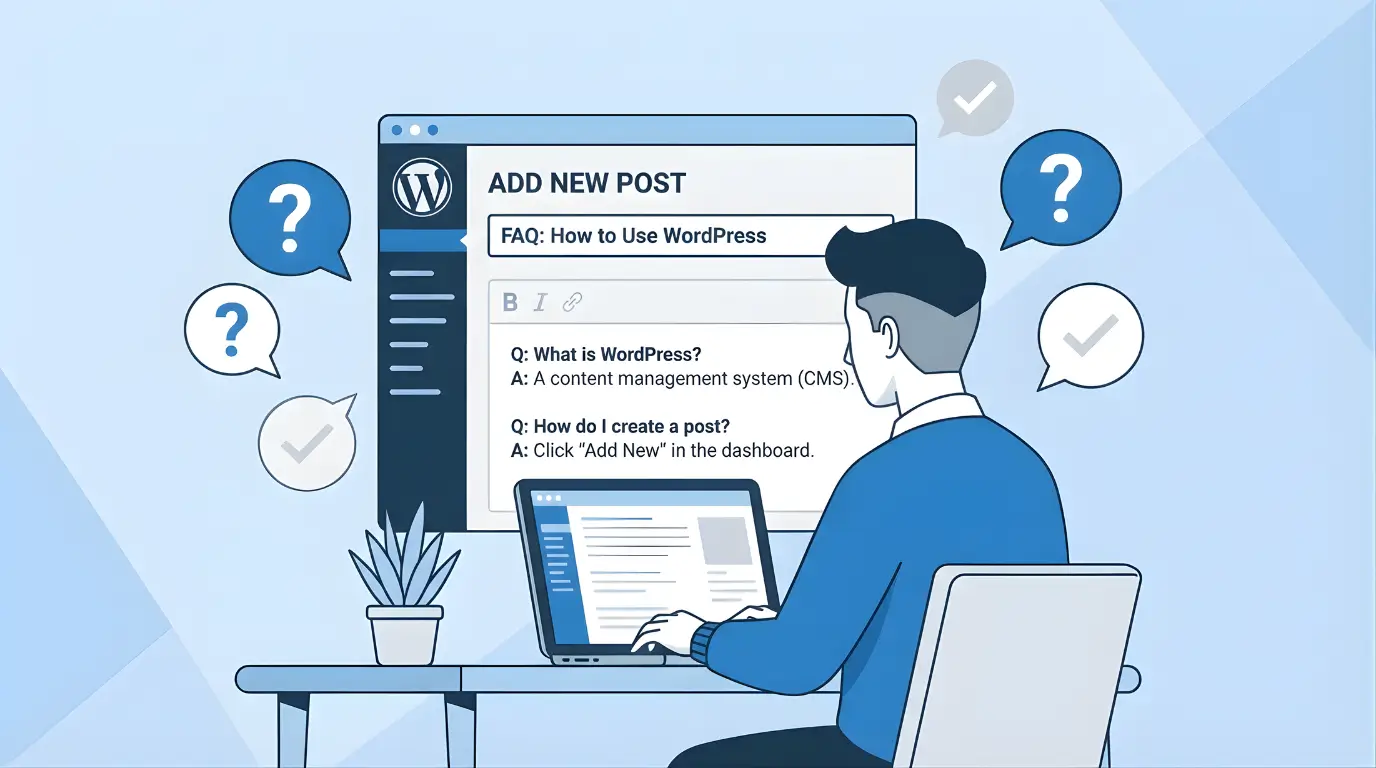
FAQ posts drive traffic because they directly answer specific questions people are searching for. They’re perfect for capturing featured snippets in search results and can rank for multiple question-based keywords in a single post.
As a beginner, you likely have many of the same questions as your audience. This makes you well-positioned to create FAQ content that addresses real concerns in an accessible language.
Implementation Steps
- Research common questions in your niche (using tools like AnswerThePublic or Google’s “People Also Ask” section)
- Group related questions together
- Create clear, concise answers to each question
- Structure your post with question-based headings
- Include a table of contents for easy navigation
- Add depth to important questions with examples or additional context
Real-World Examples
- “15 Common WordPress Questions Answered for Beginners.”
- “Sourdough Baking FAQ: Everything You Need to Know to Get Started”
- “Your Top Questions About Starting a YouTube Channel Answered”
SEO Optimization Tips
Structure questions as complete sentences that people might type into search engines. Use schema markup for FAQs to enhance your search appearance. Keep answers concise (40-50 words) to increase chances of featured snippet selection.
9. Step-by-Step Tutorials: Visual Guides
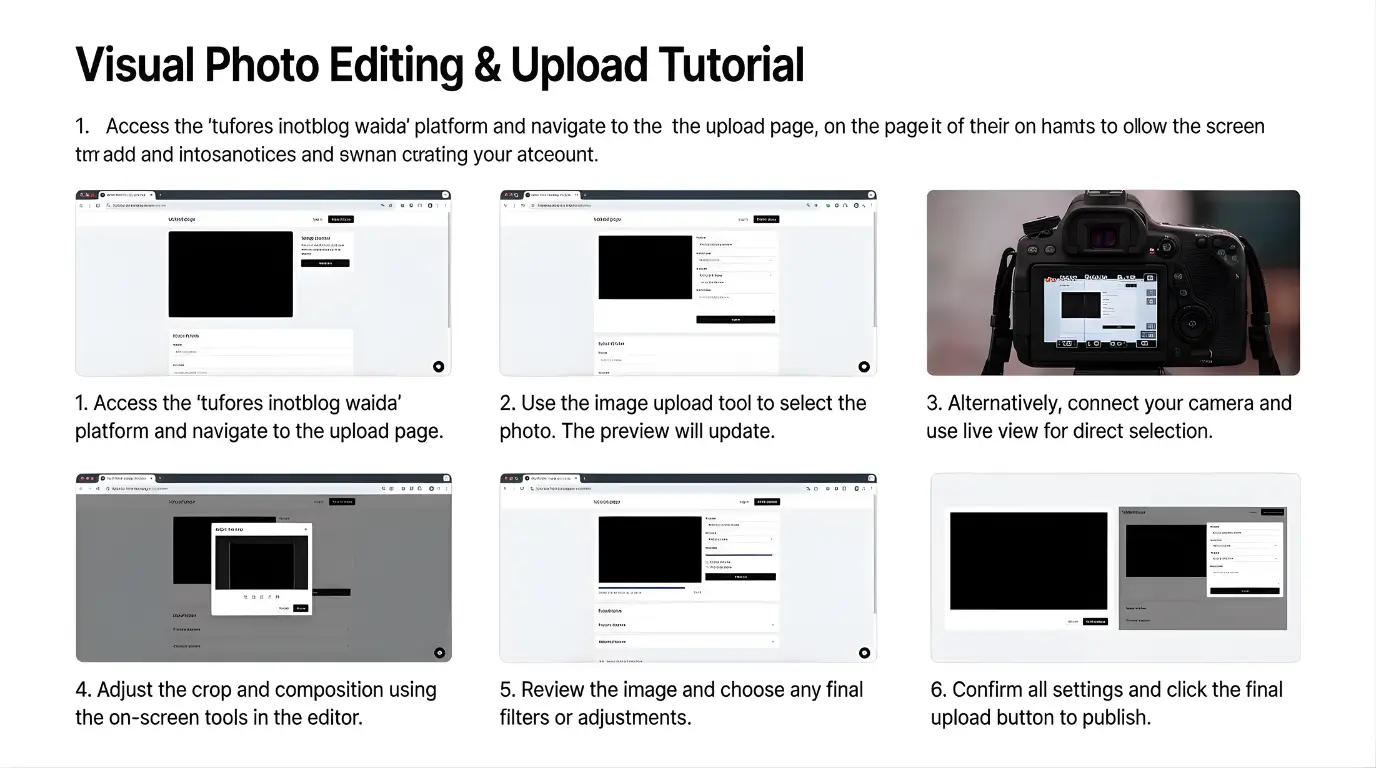
Tutorials attract traffic because they provide clear, actionable instructions for completing specific tasks. They’re highly practical, shareable, and tend to rank well for “how to” searches related to specific processes.
For beginners, creating tutorials about the skills you’re currently learning is perfect – you can document your process as you go, capturing the exact steps that other beginners need.
Implementation Steps
- Choose a specific process or task to document
- Break it down into clear, logical steps
- Take screenshots or photos of each major step
- Write concise instructions for each step
- Include tips, warnings, or notes where helpful
- Add a troubleshooting section for common issues
Real-World Examples
- “How to Create a Simple Logo in Canva: A Step-by-Step Tutorial”
- “Setting Up Google Analytics on Your Blog: Complete Tutorial with Screenshots”
- “How to Edit Photos for Instagram Using Only Free Apps”
SEO Optimization Tips
Include specific tool names and version numbers in your title and headings. Add alt text to all tutorial images with descriptive keywords. Consider creating video tutorials to embed alongside written instructions for enhanced user experience.
10. Trending Topic Analysis: Timely Insights

Trending topic posts drive traffic because they tap into current conversations and searches. They can generate significant short-term traffic spikes and position you as a timely, relevant voice in your niche.
As a beginner, you can create valuable trending content by offering fresh perspectives on industry news or connecting trending topics to evergreen principles in your niche.
Implementation Steps
- Identify trending topics in your niche using Google Trends, social media, or industry news.
- Research the topic thoroughly to understand key facts and perspectives
- Develop your unique angle or take on the trend
- Connect the trend to broader principles or evergreen concepts
- Include relevant data, examples, or case studies
- Publish quickly while the topic is still trending
Real-World Examples
- “What [New Platform Feature] Means for Content Creators”
- “5 Practical Ways to Apply [New Industry Research] to Your Business.”
- “How [Recent Algorithm Change] Affects Your Blog (And What to Do About It)”
SEO Optimization Tips
Include trending keywords and phrases in your title and headings. Promote trending content heavily on social media to capitalize on current interest. Update trending posts with new information as the story evolves to maintain relevance.
SEO and Social Sharing Tips
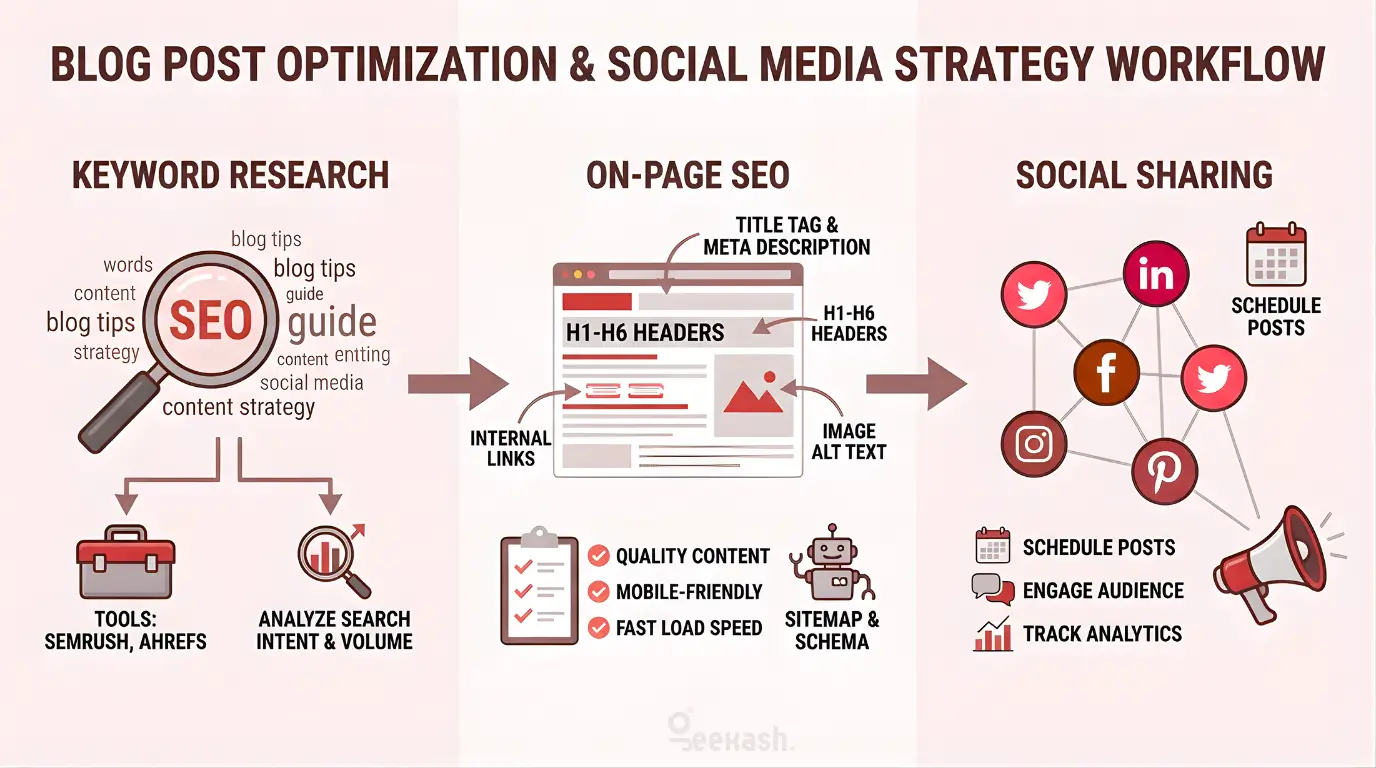
Creating great content is just the first step – you also need to optimize it to ensure it gets found. Here are some beginner-friendly tips to maximize the traffic potential of your blog posts:
Keyword Research Basics
- Use free tools like Google’s Keyword Planner or Ubersuggest to find relevant keywords.
- Look for “long-tail keywords” (longer, more specific phrases) that have less competition.
- Include your main keyword in your title, first paragraph, and at least one subheading.
- Use related keywords naturally throughout your content
On-Page SEO Elements
- Write compelling meta descriptions that include your keyword and encourage clicks.
- Use descriptive, keyword-rich alt text for all images
- Create a clear, hierarchical heading structure (H1, H2, H3)
- Include internal links to other relevant content on your blog
- Ensure your content is mobile-friendly and loads quickly
Social Sharing Optimization
- Create eye-catching featured images sized correctly for each platform
- Write multiple social media captions when promoting your post
- Include easy-to-find sharing buttons on your blog
- Consider creating “click to tweet” quotes for shareable snippets
- Pin your blog post images to relevant Pinterest boards
Conclusion
These 10 blog post ideas are specifically designed to help beginners attract traffic without requiring years of experience or deep expertise. The key is to start with formats that have proven successful and add your unique perspective and voice.
Remember, consistency is crucial. Choose one or two of these formats to start with, and aim to publish regularly. As you gain experience, you’ll discover which types of content resonate most with your audience and drive the best results for your blog.
Don’t wait for the perfect idea – pick a format from this list, choose a topic relevant to your niche, and start creating. Your blogging journey begins with that first published post!